JDSU
OLP-55
JDSU OLP-55 is a portable optical power meter designed for optical fiber testing. JDSU OLP-55 covers a wavelength range of 780 to 1700 nm and offers up to 900 calibrated wavelengths. JDSU OLP-55 uses a Germanium (Ge) or InGaAs detector.[1]
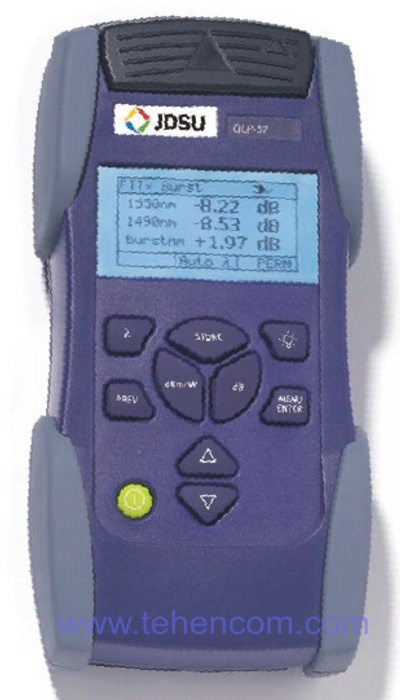
Plate 01JDSU OLP-55 SM MM Fiber Optical Power Meter OLP55
AAATesters.comWatch on YouTube
What it is
The JDSU OLP-55 is a portable optical power meter. The OLP-55 operates over wavelengths from 780 nm to 1700 nm depending on the model. The meter supports 900 calibrated wavelengths. The detector type is either Germanium (Ge) or InGaAs. The power measurement range extends from -80 dBm to +30 dBm depending on the model. The maximum input power ranges from +15 dBm to +30 dBm depending on the model. The measurement error is between 0.2 dB and 0.5 dB.[1]
How it works
General reference — not yet source-verifiedAn optical power meter works by converting incoming light into an electrical current using a photodetector. The photodetector material determines the spectral response of the meter. The instrument then measures the current and displays the optical power in units such as dBm or watts.
What do the numbers mean?
Optics & imaging8
Configuration & options5
What replaced it?
Related models
- siblingJDSU OLP-57— Listed alongside the OLP-57 as another portable optical power meter.source[1]
Where are the manuals?
Generated from public-source data on file. Enter your email to access — nothing is published; details are routed privately.
Not publicly documented
Field notes
No research found yet — worked with this tool? Share what you know.
Frequently asked questions
What is the operating wavelength range of the JDSU OLP-55?
The OLP-55 operates over wavelengths from 780 nm to 1700 nm, depending on the model.[1]
How many calibrated wavelengths does the OLP-55 support?
The OLP-55 supports 900 calibrated wavelengths.[1]
What detector types are available for the JDSU OLP-55?
The OLP-55 uses either a Germanium (Ge) or InGaAs detector.[1]
What is the power measurement range of the OLP-55?
The power measurement range extends from -80 dBm to +30 dBm, depending on the model.[1]
What is the measurement error of the OLP-55?
The measurement error is between 0.2 dB and 0.5 dB.[1]
Not publicly documented
The following facts about the OLP-55 are absent from this record as of this revision. First-hand knowledge or a citation closes a gap; every submission is reviewed before publication.
No publicly documented production dates or lifecycle milestones (introduction, end of production, EOL) for the OLP-55 are on record.
Answerable by: OEM historical records or a trade-press announcement
No publicly documented variants, configuration options, or revision breakpoints of the OLP-55 are on record.
Answerable by: an OEM product catalog or an engineer who ordered or specified the tool
The control-system platform and OS era of the OLP-55 are not on record.
Answerable by: an engineer who operated it or OEM installation records
No publicly documented failure modes or field errata for the OLP-55 are on record.
Answerable by: a field service engineer, process engineer, or maintenance technician
The process node or technology generation of the OLP-55 is not on record.
Answerable by: an OEM datasheet or a fab qualification report
No research found yet — worked with this tool? Share what you know.
Sources & citations
Sources (1)Every fact above is drawn from these public sources
- [1]tehencom.com — tehencom.comtehencom.com
Last updated Oct 7, 2026.
Compare with similar tools
View all →

The Perkin Elmer 1050 UV-VIS Spectrometer is an instrument used for analyzing ultraviolet and visible light absorption spectra.
The Agilent 11980 A is a fiber optic interferometer for precision optical measurements.